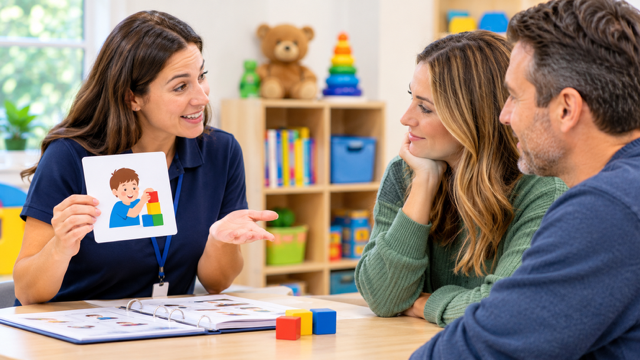
When families start ABA therapy, most of the attention goes to the sessions between their child and a behavior technician. But one of the most important parts of a strong ABA program happens with you: parent training.
If the phrase sounds intimidating, don’t worry. Parent training isn’t a test, and it isn’t about being told you’ve been doing something wrong. It’s a partnership. Here’s what it really looks like and why it can make such a big difference.
Why Parent Training Matters
Your child may spend a few hours a day with their therapy team, but they spend most of their life with you: at breakfast, in the car, at the grocery store, at bedtime. Those everyday moments are where new skills either take hold or fade away.
Parent training helps in three key ways:
- Skills carry over. A child who learns to ask for help during therapy is far more likely to keep doing it when the adults at home respond the same way.
- Consistency reduces problem behavior. When everyone uses the same approach, children learn faster what works and what doesn’t.
- You feel more confident. Many parents tell us the biggest change is in their own sense of calm and control during hard moments.
Recent Posts
- Holiday Gatherings Without the Overwhelm: A Behavior-Minded Guide for Autism Families
- What Does ABA Parent Training Actually Look Like?
- In-Home vs. In-Center ABA Therapy: How to Choose the Right Setting in North Jersey
- Sensory Processing Awareness Month: Understanding Sensory Sensitivities in Autism
- Halloween Is a Skill-Building Season: A Behavior-Minded Guide for Autism Families
What Happens in a Parent Training Session
Parent training is led by your child’s Board Certified Behavior Analyst (BCBA). Sessions are practical and hands-on, and they usually follow a simple pattern:
- Check in. Your BCBA asks how things have been going at home. What’s working? What’s been hard this week?
- Explain the strategy. Together you focus on one skill or situation, and the BCBA explains a strategy in plain language, with no jargon required.
- Show it. The BCBA or technician models the strategy with your child so you can see it in action.
- Try it. You practice the strategy yourself, right there in the session.
- Get feedback. Your BCBA tells you what went well and suggests small adjustments.
- Plan for the week. You leave with one or two clear things to try before the next session.
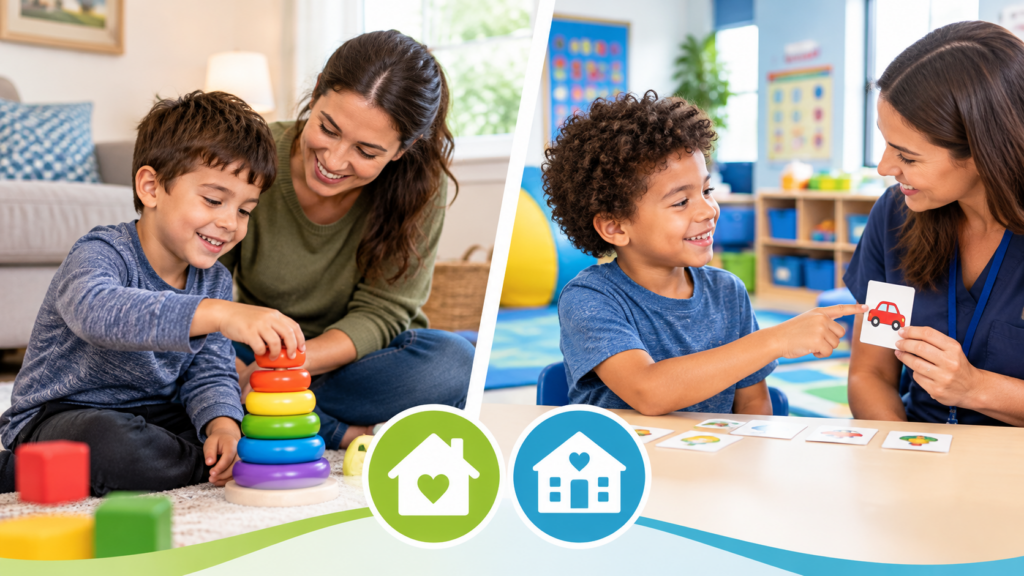
Because much of our work happens in the home, many sessions take place exactly where you’ll use these skills: your kitchen, your living room, your child’s bedroom.
Skills Parents Commonly Learn
Every family’s goals are different, but parent training often covers:
- Using reinforcement effectively: noticing and rewarding the behaviors you want to see more of.
- Giving clear instructions: short, specific directions that set your child up for success.
- Prompting and fading: giving just enough help, then gradually stepping back.
- Understanding behavior: learning to spot what a challenging behavior is trying to communicate or get.
- Teaching communication: helping your child use words, signs, pictures or devices to ask for what they need instead of using problem behavior.
- Building routines: making mornings, mealtimes, bedtime and outings smoother and more predictable.
- Planning for community outings: preparing for haircuts, doctor visits, restaurants and family events.
Tips for Getting the Most Out of Parent Training
- Bring your real-life challenges. The tough moments you face every day are exactly what parent training is for.
- Start small. Focus on one strategy at a time rather than changing everything at once.
- Involve other caregivers. Grandparents, siblings and babysitters can join sessions, too. The more people using the same approach, the better.
- Ask questions. If something doesn’t fit your family’s routine or culture, tell your BCBA. Strategies can and should be adapted.
- Celebrate progress. Small changes add up over time, for your child and for you.
Parent Training at AG Behavioral Services
At AG Behavioral Services, parent training is a core part of every child’s program, not an add-on. Our BCBAs work side by side with families across Bergen, Hudson, Passaic and Morris Counties, both in the home and at our Fair Lawn clinic. And because every family deserves to feel comfortable and understood, we offer support in Spanish: Hablamos Español.
Want to learn more? Read Can ABA Therapy Help My Child?, explore our services, or check which insurance plans we work with.
Ready to get started? Call us at 201-373-6947 or contact us online. We’re here to help your whole family grow.