The holidays are full of things we love: family, food, music, gifts and traditions. For many children with autism, they are also full of things that are hard: crowded rooms, new faces, loud noise, strong smells, late nights and a routine that suddenly disappears.
The good news is that holiday gatherings don’t have to be something your family simply survives. With a little planning, the season can become a chance to practice real skills like greeting relatives, waiting, trying new foods and asking for a break. Here’s how to approach it the way a behavior analyst would.
Before the Gathering: Make the Unknown Known
Much of the stress children feel at a gathering comes from not knowing what will happen. Your first job is to make the day predictable.
- Preview the day. Use a simple visual schedule or a short social story: “First we drive to Grandma’s. Then we say hi. Then we eat dinner. Then we open presents. Then we go home.” Photos of the house and the people who will be there help a lot.
- Practice the hard parts ahead of time. If greetings are tough, rehearse a wave, a high-five or a simple “hi” at home and reward each try. If gift opening is exciting or upsetting, practice by wrapping a few small items and taking turns.
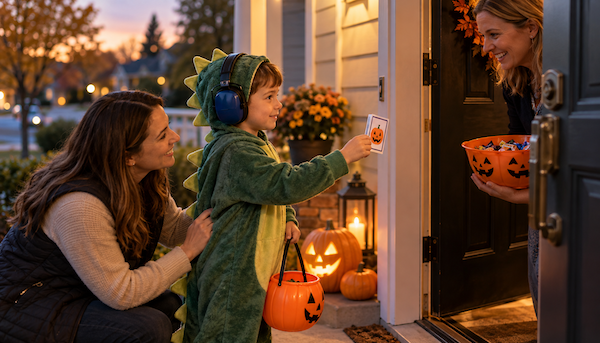
- Plan a calm space. Ask your host for a quiet bedroom or corner your child can use. Pack a “calm kit” with headphones, a favorite toy, a tablet or fidgets.
- Bring familiar food. A holiday table can be full of unfamiliar smells and textures. Bringing a few preferred foods takes the pressure off and keeps mealtime from becoming a battle.
Recent Posts
- Holiday Gatherings Without the Overwhelm: A Behavior-Minded Guide for Autism Families
- What Does ABA Parent Training Actually Look Like?
- In-Home vs. In-Center ABA Therapy: How to Choose the Right Setting in North Jersey
- Sensory Processing Awareness Month: Understanding Sensory Sensitivities in Autism
- Halloween Is a Skill-Building Season: A Behavior-Minded Guide for Autism Families
During the Gathering: Reinforce, Pace and Take Breaks
- Use “first-then.” “First say hi to Uncle Mike, then iPad time.” Pairing a harder task with something your child enjoys makes it easier to try.
- Catch the good moments. Specific praise and small rewards for sitting at the table, sharing a toy or tolerating a noisy room teach your child that these situations can go well. Reinforcement works best when it comes right away.
- Schedule breaks before they’re needed. Don’t wait for a meltdown. Plan short breaks in the quiet space every so often, and teach your child to ask for one with a word, a sign or a break card.
- Keep expectations realistic. Staying for dinner and dessert is a win, even if you skip the long evening. Leaving on a good note is better than staying until things fall apart.
Help Family Members Help Your Child
Relatives usually want to help but don’t always know how. A short message before the gathering can make a big difference. You might let them know:
- That your child may not want hugs, and a wave or a fist bump is a great alternative.
- That breaks in a quiet room are part of the plan, not a sign that something is wrong.
- Which topics, toys or games your child loves, so they have an easy way to connect.
Winter Break: Protect the Routine Where You Can
Two weeks off from school can be as hard as the gatherings themselves. You can’t keep every part of the routine, but you can keep the anchors:
- Keep wake-up time, meals and bedtime as close to normal as possible.
- Post a simple daily schedule, even on “lazy” days.
- Mark the calendar so your child can see when school and therapy start again.
- Keep ABA sessions going during the break if your schedule allows. Consistency helps skills stick.
After the Gathering: Reflect and Reset
Afterward, notice what worked and what didn’t. Did your child do well until a certain time? Was there one trigger, like the dog or the singing? Write it down. These notes are valuable for next year and for your child’s BCBA, who can turn them into goals.
Then get back to the regular routine as soon as you can, and celebrate the wins, no matter how small.
How AG Behavioral Services Can Help
At AG Behavioral Services, our BCBAs can build holiday skills right into your child’s treatment plan, from greeting relatives to tolerating new environments to asking for a break. Through our parent training, we also coach you on using these strategies at home and out in the community, so the progress continues long after the decorations come down.
We provide in-home ABA therapy across Bergen, Hudson, Passaic and Morris Counties, along with in-clinic services at our Fair Lawn location. Hablamos Español.
Have questions about ABA therapy for your child? Call us at 201-373-6947 or contact us online. From all of us at AGBS, we wish your family a happy and peaceful holiday season.