Your child covers their ears when the vacuum turns on. They’ll only wear one pair of soft pants. They spin, jump, or crash into the couch over and over. Or they don’t seem to notice when they scrape a knee. These aren’t random quirks. For many children with autism, they come from differences in how the brain takes in and responds to sensory information.
October is Sensory Processing Awareness Month, a good time to look at what sensory differences are, how they connect to behavior, and what families can do to help.
What are sensory differences?
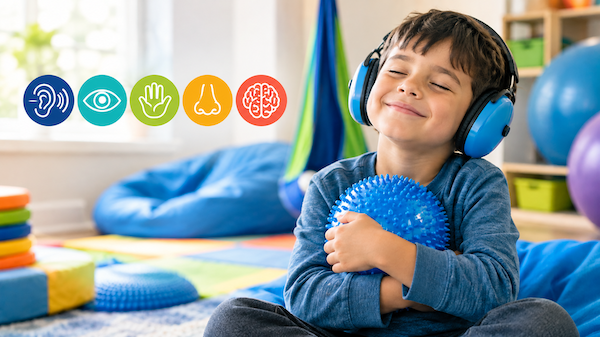
We take in the world through our senses: sight, sound, touch, taste, and smell, plus two that often get overlooked. The vestibular sense tracks balance and movement. The proprioceptive sense tells us where our body is in space. Some sources add interoception, our sense of hunger, thirst, temperature, and needing the bathroom.
Many autistic children process this input differently. Sensory differences are part of how autism is described in the diagnostic criteria, and they usually show up in one of two ways:
Over-responsive (sensitive): everyday input feels too intense. Bright lights, loud rooms, clothing tags, or certain food textures can feel overwhelming or even painful.
Under-responsive (seeking): the child needs more input to notice it. They may seek out movement, deep pressure, loud sounds, or strong tastes, or not register pain or cold.
Most kids have a mix. A child might be very sensitive to sound and also crave spinning and jumping.
Recent Posts
- In-Home vs. In-Center ABA Therapy: How to Choose the Right Setting in North Jersey
- Sensory Processing Awareness Month: Understanding Sensory Sensitivities in Autism
- Halloween Is a Skill-Building Season: A Behavior-Minded Guide for Autism Families
- Early Intervention ABA Therapy in Fair Lawn, NJ: Why Starting Early Changes Everything
- 5 Questions to Ask During Your ABA Insurance Benefits Check in 2026
How sensory needs show up as behavior
When sensory input is too much or not enough, children act to fix it. That can look like:
Covering ears, running from a room, or melting down in a busy store. Refusing certain clothes, haircuts, tooth brushing, or bath time. Eating only a small set of foods with familiar textures.
Rocking, hand-flapping, spinning, or jumping.
Chewing on shirts, toys, or pencils.
Climbing, crashing, or pushing hard against people and furniture.
In ABA, we look at the function of a behavior, meaning what it does for the child. Some behaviors are about escaping something uncomfortable. Others give the child input their body is looking for. Knowing which is which changes the plan. A child who runs from the cafeteria because it’s too loud needs a different approach than a child who runs to get attention.
What families can do at home
Watch and take notes. For a week, jot down when hard moments happen, where, and what was going on. Patterns often appear fast: the grocery store at 5 p.m., the bathroom hand dryer, the itchy sweater.
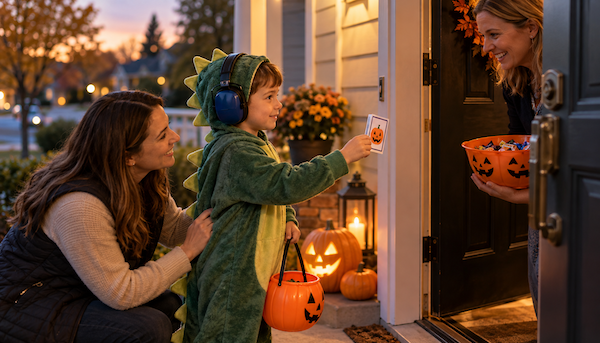
Adjust the environment. Dim lights, use noise-canceling headphones, cut out tags, or let your child eat in a quieter spot. Small changes can prevent a lot of distress.
Offer input on purpose. If your child seeks movement or pressure, build it into the day: a trampoline, swinging, carrying a laundry basket, pushing a cart, or a tight hug if they like it. Getting that input in a planned way often reduces seeking at the wrong times.
Create a calm-down space. A corner with soft pillows, a weighted lap pad, dim light, and a few favorite items gives your child somewhere to reset.
Prepare for hard sensory events. Haircuts, doctor visits, and crowded outings go better with a preview, a social story, and a comfort item.
How ABA and OT work together
Sensory needs are often best addressed by a team.
Occupational therapists evaluate how a child processes sensory input and build strategies that help their body regulate.
ABA therapy helps children build the skills to cope and communicate. At AG Behavioral Services, that can include:
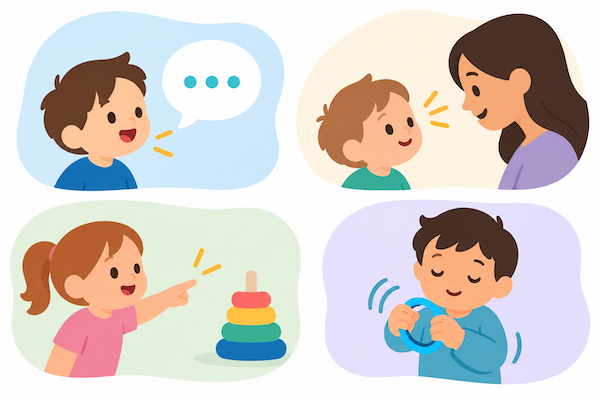
Teaching a child to ask for a break or for headphones instead of melting down. Gradual exposure to hard situations, like tooth brushing or new foods, in small, rewarded steps.
Teaching replacement behaviors that meet the same sensory need in a safer way, like chewing a chew toy instead of a shirt collar.
Parent training so these strategies carry over into everyday routines.
Our BCBAs can recommend occupational therapists or collaborate with your child’s current OT so everyone works toward the same goals.
When to ask for help
It’s worth talking to a professional if sensory issues are getting in the way of eating, sleeping, dressing, school, or family outings, or if they lead to self-injury or frequent meltdowns. You don’t need a full picture before you reach out. Starting the conversation is enough.
Seeing the world through their senses
Sensory differences aren’t misbehavior. They’re your child’s way of managing a world that can feel too loud, too bright, or not quite enough. With understanding and the right supports, children can learn to cope, communicate their needs, and take part more fully in the things they love.
Have questions about your child’s sensory needs?
AG Behavioral Services provides ABA therapy across Bergen, Hudson, Passaic, and Morris Counties. Call 201-373-6947 or fill out our contact form. Hablamos Español.