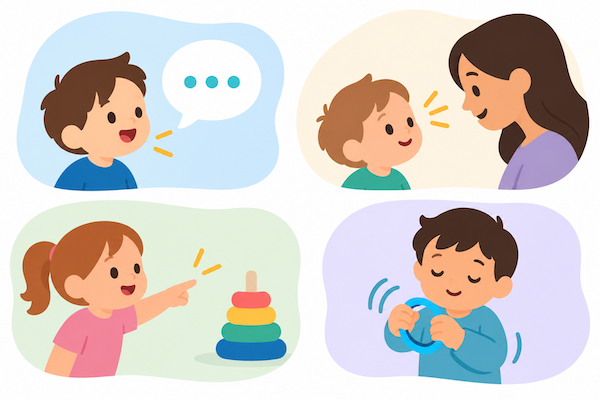
If you’ve spent any time in the autism community, you’ve probably heard the saying: “If you’ve met one person with autism, you’ve met one person with autism.” It’s a gentle way of pointing at something every parent already knows in their bones. Two children can share the same diagnosis and look almost nothing alike. One is nonspeaking and deeply sensitive to sound. Another talks constantly, aces spelling tests, and comes undone by a change in routine. One seeks out hugs; another can’t stand to be touched. Same word on the paperwork, entirely different child.
For a long time, that variety was mostly described rather than explained. We could see the differences, but we couldn’t say why they happened at the biological level. A study published this spring in Nature Neuroscience has started to change that — and it offers parents a hopeful new way to think about what “autism” actually means.
What the researchers found
A team from the Child Mind Institute, the Istituto Italiano di Tecnologia, and several international partners looked at brain-connection patterns in nearly 2,000 people, including 940 autistic individuals whose brain scans were shared through a large open research collection called ABIDE. Instead of asking “does this brain look autistic or not,” they asked a subtler question: how are the different regions of the brain talking to each other?
They found two distinct patterns.
In one group, certain brain regions were communicating less than usual — a pattern researchers call hypoconnectivity. This pattern was tied to biological pathways involved in how brain cells send signals to one another.
Recent Posts
- Halloween Is a Skill-Building Season: A Behavior-Minded Guide for Autism Families
- Early Intervention ABA Therapy in Fair Lawn, NJ: Why Starting Early Changes Everything
- 5 Questions to Ask During Your ABA Insurance Benefits Check in 2026
- What Horizon NJ Health’s New 2026 ABA Policy Means for Your Child’s Coverage
- Why Autism Looks So Different Person to Person
In the other group, the opposite was true. Brain regions were communicating more than usual — hyperconnectivity — and this pattern was linked to pathways connected to the immune system. Interestingly, children in this second group tended to score somewhat higher on standard measures of autism severity.
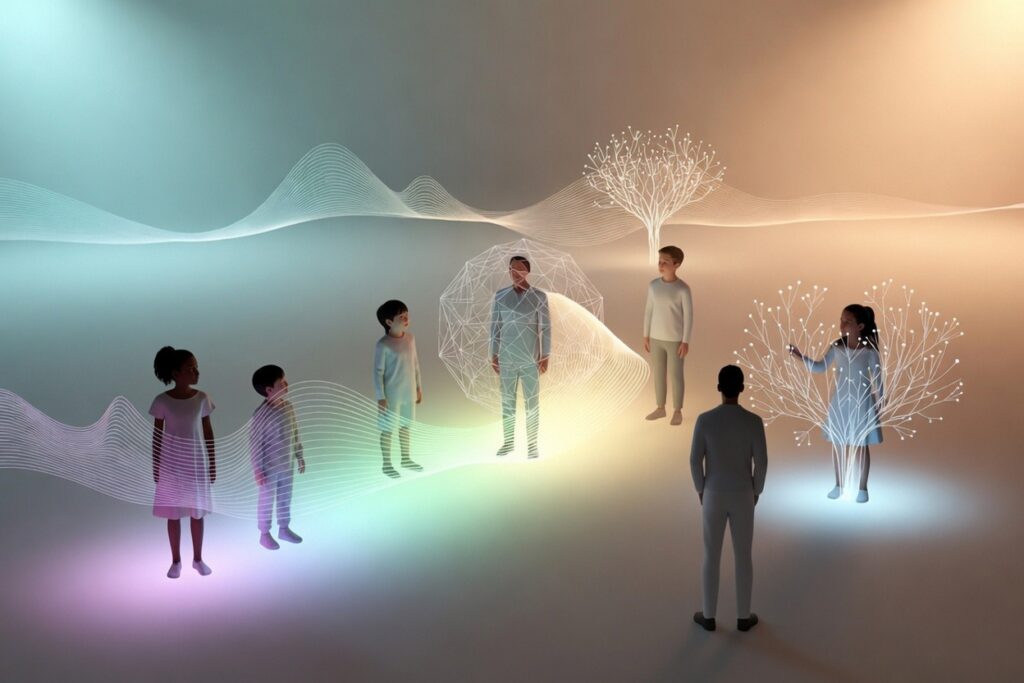
In other words, two children could both be autistic, and yet their brains could be running on almost opposite wiring. That’s a big deal, because it’s the first time scientists have had solid, biology-based evidence that the differences families see every day may reflect genuinely different underlying mechanisms — not just different personalities laid over the same condition.
Why this matters for families
It’s tempting to read a headline like this and worry it’s about putting kids in boxes. It isn’t. The researchers were careful to say that autism cannot now be neatly split into “type one” and “type two,” and that these findings do not create a new diagnostic system. These two subtypes are almost certainly part of a much larger, more detailed picture that scientists are only beginning to sketch.
What the study does do is validate something parents have long felt was true: that these differences are real and rooted in biology. Your child’s particular mix of strengths and challenges isn’t a mystery or a failure of effort. It reflects how their brain is actually built and how its regions communicate.
That reframing has practical value. It’s the strongest evidence yet for why one-size-fits-all thinking about autism doesn’t work — and why individualized support is not a luxury but a necessity. A therapy, classroom setup, or communication tool that transforms life for one autistic child may do very little for another. If their brains are organized differently, we shouldn’t be surprised when they respond to support differently. This research gives that intuition a scientific backbone.
A step toward more personalized care
The longer-term promise is what researchers call precision medicine: care tailored to the specific biology of the person in front of you rather than to a broad label. We’re not there yet. This study is a foundation, not a finished blueprint, and it will take years of additional work before findings like these translate into anything a doctor uses in an appointment.
But the direction is encouraging. If scientists can eventually connect specific brain patterns to specific needs, it could help families and clinicians make better-informed decisions sooner — less trial and error, more understanding of why a given approach fits a given child.
There’s also a quieter lesson in how this discovery happened. It was only possible because researchers around the world shared their brain-imaging data through open collections like ABIDE. No single lab could have scanned 2,000 brains and spotted these patterns alone. When families consent to participate in research and scientists agree to share what they learn, questions that once felt impossibly large start to become answerable.
The takeaway
Autism looks different from person to person because, at least in part, autistic brains are different from one another — in measurable, meaningful ways. That’s not a reason for worry. If anything, it’s a validation of what the community has said for years: every autistic person is an individual, and they deserve support built around who they actually are.
The science is still early, and no study changes what you already know best, which is your own child. But it’s genuinely good news that researchers are moving closer to understanding the “why” behind the differences families live with every day. Understanding is where better, more personal support begins.
This post is for general information and isn’t medical advice. If you have questions about your child’s care, your clinician is the best guide.
Source: “New Study Identifies Different Biological Subtypes of Autism,” Child Mind Institute (May 2026), reporting on research published in Nature Neuroscience.
Ongoing care for children, adolescents, and young adults with autism to improve the quality of their lives. If you would like learn more about how AGBS can help please contact us here , or call 201-373-6947.