
When your child’s ABA therapy session ends and the behavior technician heads out the door, the work doesn’t stop — and neither does your child’s potential to grow. One of the most powerful things parents can do to accelerate their child’s progress is to reinforce ABA goals in the natural moments of everyday life. The good news? You don’t need a degree in behavior analysis to do it well.
At AG Behavioral Services, we believe that parents are an essential part of the therapy team. This guide is designed to give you simple, practical strategies you can use right now — from the breakfast table to bedtime.
1. Know Your Child’s Current Goals
The first step is knowing exactly what your child’s BCBA and behavior technician are working on. Ask your BCBA to walk you through the active treatment goals in plain language. What skills are being targeted? What behaviors are being reduced? What does “progress” look like for each goal?
Keep a simple list somewhere visible — on the fridge, your phone’s notes app, or wherever works for you. When you know what’s being worked on, you can look for natural opportunities to practice throughout the day.
2. Use Everyday Routines as Practice Opportunities
You don’t need to set up a special “therapy time” at home. In fact, ABA is most powerful when skills are practiced in the real environments where your child will actually use them. Here are some examples:
- Mealtimes: Practice requesting food items, using utensils, tolerating different textures, or sitting at the table for a set period of time.
- Getting dressed: Work on sequencing, independence with fasteners, and following multi-step directions.
- Bath time: Great for turn-taking, labeling body parts, tolerating sensory experiences, and following instructions.
- Grocery shopping: Practice labeling items, waiting, requesting, and transitioning between aisles.
- Bedtime routines: Excellent for practicing calming strategies, following predictable sequences, and communicating needs.
Recent Posts
- Halloween Is a Skill-Building Season: A Behavior-Minded Guide for Autism Families
- Early Intervention ABA Therapy in Fair Lawn, NJ: Why Starting Early Changes Everything
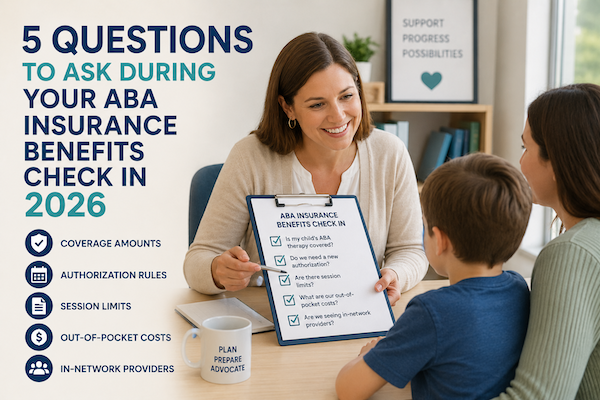
- 5 Questions to Ask During Your ABA Insurance Benefits Check in 2026
- What Horizon NJ Health’s New 2026 ABA Policy Means for Your Child’s Coverage
- Why Autism Looks So Different Person to Person
3. Be Consistent with Reinforcement
In ABA therapy, reinforcement is the engine behind skill-building. When a desired behavior is followed by something your child enjoys — praise, a favorite toy, a high five, or a small treat — that behavior is more likely to happen again. The key is consistency.
Ask your BCBA what specific reinforcers are being used during sessions and try to use the same ones at home. Also ask about the timing — reinforcement is most effective when it comes immediately after the behavior. A delayed “good job” is far less powerful than an immediate one.
One important note: try to avoid accidentally reinforcing problem behaviors. If your child throws a tantrum to avoid a task and you remove the task, you’ve inadvertently taught them that tantrums work. Your BCBA can help you identify these patterns and develop a consistent response plan.
4. Communicate Regularly with Your BCBA
You are your child’s expert. Your observations at home — what triggered a meltdown, when your child surprised you with a new skill, or what’s been particularly challenging — are invaluable information for the clinical team.
Make it a habit to jot down quick notes throughout the week and share them with your BCBA at check-ins. This two-way communication ensures that your home efforts and the therapy sessions are working in sync, not in isolation.
5. Take Care of Yourself, Too
Parenting a child with ASD is a marathon, not a sprint. It’s easy to feel pressure to maximize every interaction as a teaching opportunity — but that’s not sustainable, and it’s not necessary. Moments of connection, play, and fun without any therapeutic agenda are equally important for your child and for you.
If you’re feeling overwhelmed, talk to your BCBA. Parent training and support are core parts of what we offer at AGBS, and we’re here to help you feel confident, not burdened.
A Final Note
The hours between ABA sessions are not a gap — they’re an opportunity. With a little knowledge and a consistent approach, you can become one of the most powerful forces driving your child’s progress. You don’t have to do it perfectly. You just have to show up, which you already do every day.
Questions about ABA parent training or your child’s goals? Contact the AGBS team — we’re always happy to help.
AGBS provides ongoing care for children, adolescents, and young adults with autism to improve the quality of their lives. If you would like learn more about how AGBS can help please contact us here , or call 908-913-0443.