
If you’ve seen the headlines lately, you may have come across a striking statistic: according to a White House statement marking Autism Awareness Day this past April, 1 in 32 children in the United States is now identified as being on the autism spectrum. For parents and caregivers, a number like that can feel alarming. But before worry sets in, it’s worth understanding what that figure actually means — and what it doesn’t.
At AG Behavior Specialists, we work with families every day who are navigating the early stages of an autism diagnosis. Our goal isn’t just to provide therapy — it’s to help families feel informed, empowered, and supported at every step. So let’s break this down.
What Does "1 in 32" Really Mean?
First, some important context. The rise in autism prevalence figures over recent decades largely reflects improvements in how autism is identified — not necessarily a dramatic increase in the number of people who have always had it. The CDC’s Autism and Developmental Disabilities Monitoring (ADDM) Network, which tracks prevalence data nationally, has consistently noted that expanded diagnostic criteria, greater awareness among pediatricians, and improved screening tools have all contributed to higher identification rates over time. Children who might previously have been missed — especially girls, children of color, and those with subtler presentations — are now being identified more reliably.
That said, 1 in 32 is a significant figure, and it means that autism touches an enormous number of families across the country. You are far from alone.
Recent Posts
- Halloween Is a Skill-Building Season: A Behavior-Minded Guide for Autism Families
- Early Intervention ABA Therapy in Fair Lawn, NJ: Why Starting Early Changes Everything
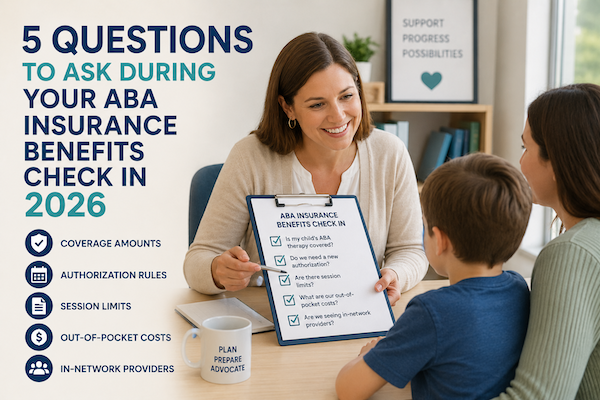
- 5 Questions to Ask During Your ABA Insurance Benefits Check in 2026
- What Horizon NJ Health’s New 2026 ABA Policy Means for Your Child’s Coverage
- Why Autism Looks So Different Person to Person
Why Early Identification Matters More Than Ever
The good news embedded in this statistic is that awareness is growing — and awareness leads to earlier diagnosis. Research consistently shows that early intervention produces the best outcomes for children with autism. The earlier a child begins receiving targeted support, the more time their developing brain has to build new skills, communication pathways, and adaptive behaviors.
Applied Behavior Analysis (ABA) therapy is the most evidence-based treatment available for autism. Both the American Psychological Association and the US Surgeon General recognize ABA as an evidence-based practice for autism — and it’s most powerful when started young. ABA works by building on a child’s strengths, teaching practical skills, and reducing behaviors that get in the way of learning and daily life, all through structured, positive, individualized programming. ABA is most effective when applied intensively and early, ideally before age 4.
So Your Child Was Just Diagnosed. Now What?
If your child has recently received an autism diagnosis, it’s completely normal to feel overwhelmed. Here are the steps most families take — and that we help guide families through every day:
1. Take a breath. A diagnosis is not a verdict. It’s a doorway to the right support.
2. Request an ABA evaluation. A Board Certified Behavior Analyst (BCBA) will assess your child’s current skills, identify areas of need, and create an individualized treatment plan.
3. Check your insurance coverage. In most states, ABA therapy for autism is covered by insurance. Our team can help walk you through what your plan covers.
4. Get started as soon as you’re ready. Waitlists for ABA services can be long — reaching out early means your child gets support sooner.
5. Involve your whole family. ABA works best when families are part of the process. Parent training is a key component of what we do, because progress at home reinforces everything happening in therapy.
What We Want Every Family to Know
The number 1 in 32 can feel scary in a headline. In our practice, it means something different: it means more families finding answers, more children getting the support they need, and a growing community of parents who understand what you’re going through.
If your child has received a diagnosis — or if you have concerns and haven’t pursued one yet — we’re here to help. Reach out to AG Behavior Specialists to learn about our evaluation process and how we can support your family.