
Daily Mindfulness Practice Reduces Anxiety for Autistic Adults
Living with autism as an adult can present unique challenges, especially when it comes to managing anxiety. Social interactions, sensory overload, and changes in routine can all contribute to heightened stress levels. While there is no one-size-fits-all solution, research and real-life experience increasingly point to mindfulness as a powerful tool for easing anxiety in autistic adults. What is Mindfulness? Mindfulness is the practice of intentionally focusing your attention on the present moment, while calmly acknowledging and accepting your feelings, thoughts,

In-Home vs. In-Center ABA Therapy: How to Choose the Right Setting in North Jersey
Once you’ve decided ABA therapy is right for your child, the next question comes fast: where should it happen? Some families picture a therapist coming to the house. Others prefer a clinic with structured rooms and other kids around. Both can work well. The best choice depends on your child’s goals, your family’s schedule, and where your child learns best. With our new in-center clinic opening in Fair Lawn this month, AG Behavioral Services families now have both options. Here’s
Sensory Processing Awareness Month: Understanding Sensory Sensitivities in Autism
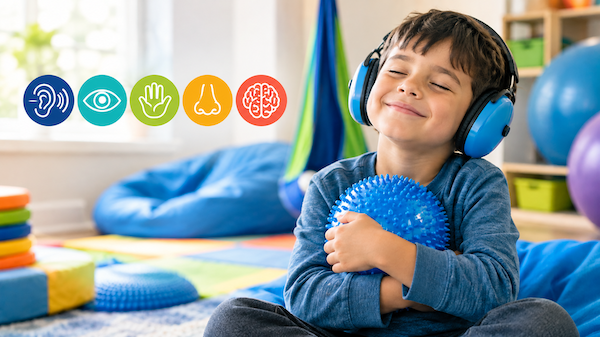
Your child covers their ears when the vacuum turns on. They’ll only wear one pair of soft pants. They spin, jump, or crash into the couch over and over. Or they don’t seem to notice when they scrape a knee. These aren’t random quirks. For many children with autism, they come from differences in how the brain takes in and responds to sensory information. October is Sensory Processing Awareness Month, a good time to look at what sensory differences are,

Why Autism Looks So Different Person to Person
If you’ve spent any time in the autism community, you’ve probably heard the saying: “If you’ve met one person with autism, you’ve met one person with autism.” It’s a gentle way of pointing at something every parent already knows in their bones. Two children can share the same diagnosis and look almost nothing alike. One is nonspeaking and deeply sensitive to sound. Another talks constantly, aces spelling tests, and comes undone by a change in routine. One seeks out hugs;
Halloween Is a Skill-Building Season: A Behavior-Minded Guide for Autism Families
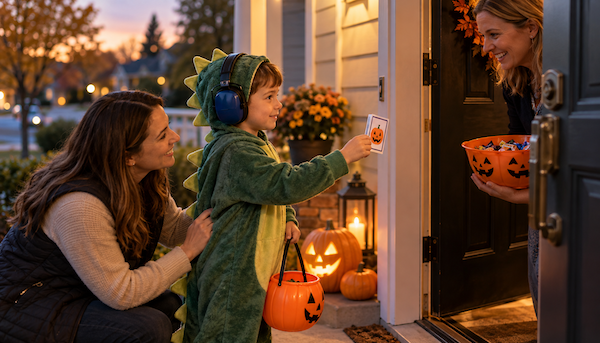
Most Halloween advice for autism families is about getting through the night. This year, try something different: treat Halloween as a few weeks of practice for skills your child will use long after the candy is gone. Think about what one short trip down the block asks of a child. They wait in line, knock on a stranger’s door, make a request, take one item, say thank you, and move on. They handle a change in routine, wear new clothes,
Early Intervention ABA Therapy in Fair Lawn, NJ: Why Starting Early Changes Everything
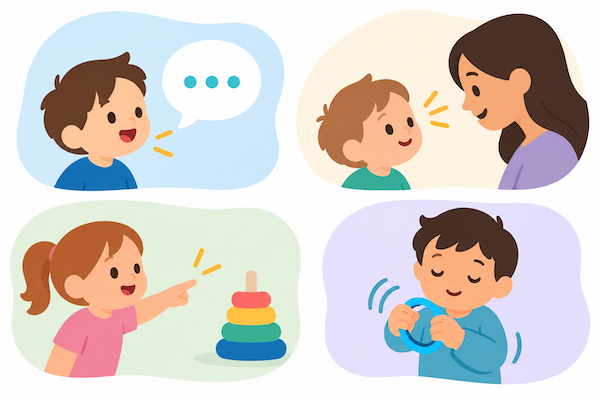
If you’re a Fair Lawn parent noticing your toddler isn’t hitting the same milestones as other kids their age — or you’ve already received an autism diagnosis and aren’t sure what to do next — here’s the one thing worth knowing above all else: the earlier a child gets support, the more effective that support tends to be. A young child’s brain is at its most adaptable in the first several years of life, which is exactly the window early
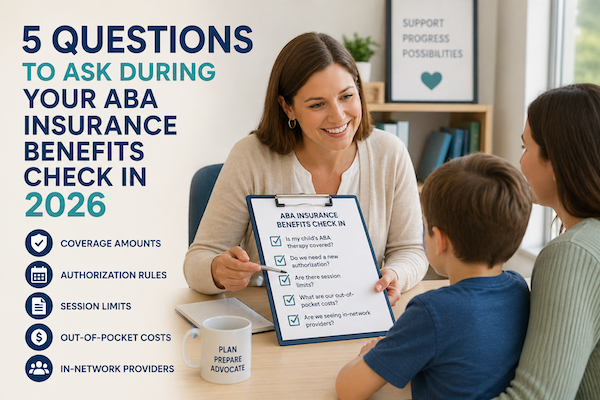
5 Questions to Ask During Your ABA Insurance Benefits Check in 2026
A benefits check is often the first real step in getting your child started with ABA therapy — but it’s easy to walk away from that call with more questions than answers. Insurance rules affecting autism coverage have shifted heading into 2026, so it’s worth knowing exactly what to ask. Here are five questions that will get you the clearest picture. 5 Questions to Ask 1. Is my plan fully insured or self-funded? This distinction matters more than most families
What Horizon NJ Health’s New 2026 ABA Policy Means for Your Child’s Coverage
If your family has ABA therapy authorized through Horizon Blue Cross Blue Shield of New Jersey or Horizon NJ Health, there’s an important update you need to know about. As of January 1, 2026, Horizon rolled out revised medical policy guidelines for Applied Behavior Analysis services — and they change how ongoing coverage gets evaluated. Here’s what parents and caregivers need to understand, in plain language. What Changed Horizon’s updated policy applies to ABA authorization requests for members on Horizon

What to Expect from In-Clinic ABA: Preparing for Our New Fair Lawn Center
For years, AG Behavioral Services has brought high-quality, in-home ABA therapy to families across Bergen, Hudson, Passaic, and Morris counties. Now, we’re thrilled to share the next chapter in our story: beginning September 2026, AGBS will offer in-clinic ABA services at our brand-new center at 17-17 Route 208 in Fair Lawn, NJ. If your family has only experienced ABA at home — or if you’re just beginning your ABA journey — you probably have questions. What actually happens in a

Autism and Aging: A New Frontier the World Can No Longer Ignore
For decades, when people talked about autism, they pictured children. Early intervention, school supports, transition programs — the scaffolding of autism care was built almost entirely around the young. But children grow up. And the generation of individuals diagnosed in the earliest waves of widespread autism awareness is now entering midlife and, increasingly, later adulthood. A question that was once easy to defer has become impossible to ignore: What happens to autistic people as they age? That question took center

The Global State of Autism Research in 2026: What Families Need to Know
Every year, the world’s leading autism researchers gather to share what they’ve discovered, what they’re still working to understand, and where the field is headed. This year was especially significant — and if you’re an individual on the spectrum or a family navigating autism services, the news coming out of this gathering is worth knowing about. A Historic Gathering in Prague In April 2026, more than 2,400 scientists, clinicians, advocates, and autistic self-advocates from 75 countries convened in Prague, Czech

What the New Autism Rate of 1 in 32 Means for Families
If you’ve seen the headlines lately, you may have come across a striking statistic: according to a White House statement marking Autism Awareness Day this past April, 1 in 32 children in the United States is now identified as being on the autism spectrum. For parents and caregivers, a number like that can feel alarming. But before worry sets in, it’s worth understanding what that figure actually means — and what it doesn’t. At AG Behavior Specialists, we work with

Meltdowns vs. Tantrums: What’s the Difference and How Should Parents Respond?
If you are the parent of an autistic child, you have almost certainly been in the middle of an intense behavioral episode in a public place — the grocery store, a birthday party, the school pickup line — and felt the weight of other people’s stares. Maybe you have heard a version of “that child just needs better discipline.” Maybe you have even wondered it yourself in a particularly depleted moment. Here is what we want you to know: what

How to Talk to Your Child’s Siblings About Autism
If you have more than one child and one of them is autistic, you have probably faced a moment where your neurotypical child asked a question you were not quite sure how to answer. Why does my brother get so upset about loud noises? Why does my sister get to leave the restaurant early? How come the rules feel different for them? These are not easy conversations. But they are important ones — and having them thoughtfully can make a

Understanding Sensory Processing in Autism: A Guide for Parents and Caregivers
Have you ever watched your child melt down at a birthday party while other kids seemed completely unfazed by the noise and chaos? Or noticed that your child refuses to wear certain clothing, or craves roughhousing and spinning long past the age you might expect? These behaviors often trace back to something called sensory processing — and for many autistic children, it is at the core of their daily experience. Understanding how your child’s sensory system works can be one

Sleep and Autism: Why It’s So Hard and What Actually Helps
If bedtime feels like a battle in your home, you are not alone. Sleep problems are one of the most common — and least talked about — challenges facing families of autistic children. Research consistently shows that between 50 and 80 percent of autistic children experience significant sleep difficulties, compared to around 25 percent of neurotypical children. The impact ripples across the entire household: exhausted kids, exhausted parents, and days that are harder than they need to be. At AG

Navigating School & ABA Therapy: How to Get Them Working Together for Your Child
If your child receives ABA therapy at home and also has an Individualized Education Program (IEP) at school, you may feel like you’re managing two separate worlds. Different goals, different strategies, different teams — and you in the middle, trying to make sense of it all. The good news: these two worlds can — and should — work together. When your child’s school team and ABA team are aligned, your child gets a consistent, reinforcing experience across every environment they

How to Support Your Child’s ABA Goals Between Sessions: A Parent’s Playbook
When your child’s ABA therapy session ends and the behavior technician heads out the door, the work doesn’t stop — and neither does your child’s potential to grow. One of the most powerful things parents can do to accelerate their child’s progress is to reinforce ABA goals in the natural moments of everyday life. The good news? You don’t need a degree in behavior analysis to do it well. At AG Behavioral Services, we believe that parents are an essential

Measuring Progress: What to Expect in Your Child’s First 6 Months of ABA Therapy
Starting ABA therapy brings hope, but also questions about what progress will look like and when you’ll start seeing changes. At AG Behavioral Services, we know that understanding the trajectory of ABA therapy helps families stay encouraged through the process and recognize meaningful improvements as they occur. This guide explains what to expect during your child’s first six months of ABA services. The First Month: Building Rapport and Baseline Assessment The initial weeks of ABA therapy focus heavily on

Preparing Your Home for In-Home ABA Therapy: A Parent’s Guide
Starting ABA therapy at home is an exciting step in your child’s developmental journey. At AG Behavioral Services, we’ve helped countless New Jersey families prepare their homes for successful therapy sessions. Whether you’re new to ABA or transitioning from a clinic-based program, creating the right environment can make a significant difference in your child’s progress. Creating an Effective Therapy Space Your home doesn’t need a complete makeover, but designating specific areas for therapy helps create consistency and focus. Choose a